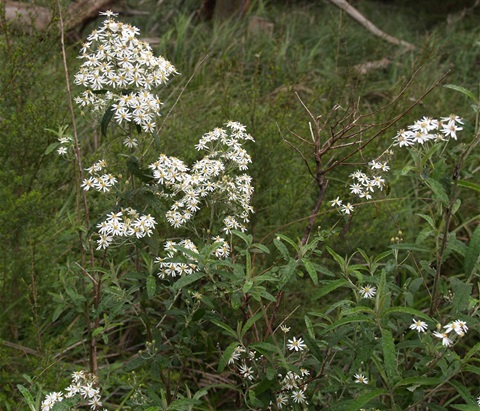
Olearia phlogopappa ssp.continentalis
Dusty Daisy-bush
Open to dense shrub with greyish-white branchlets and leaf undersides from dense covering of tiny star-shaped hairs.
Additional information
- SynonymPreviously referred to as Olearia phlogopappa var. phlogopappa
- FamilyAsteraceae
- StoreyMiddle storey
- Size1-3 m x 1-2 m
- Plant groupingShrubs 1.5-10 m
- LeavesThin, dull pale green, narrowly egg-shaped leaves with blunt tip, toothed to wavy margins, finely wrinkled above from depressed network of veins, 25-80 mm x 5-18 mm. Lower surface white to grey with dense star-shaped hairs and stalkless glands.
- Flower colourWhite with yellow centres
- Flowering timeSeptember to January
- FlowersLarge bunches of daisy flowerheads to 25 mm across, at or near the ends of branches.
- Bird attractingNo
- Butterfly attractingNo
- Frog habitatNo
- Growing conditionsMoist well drained soils in moist to wet forests. Frost and snow tolerant. Dappled and semi shade.
- Garden useAn attractive plant which will also cope in full sun. Mulching soil and pruning after flowering beneficial.
- Commercially availableAustralian plant & indigenous nurseries
- Conservation statusLocally common within its preferred growing conditions
- Related speciesA revision has changed the sub-specific name based on leaf shape and the stalkless glands on the leaf underside. Ssp. phlogopappa occurs on Wilsons Prom. Similar to Olearia lirata which can be distinguished by longer leaves with a pointed tip and smooth upper surface, with only the mid-vein depressed; 10-16 rays per floret. Pink, magenta and blue forms are also available commercially.
Photo Gallery
Photographer/s: 1, 2 Healesville Sanctuary ©; 3 Marilyn Bull ©
Plant Communities