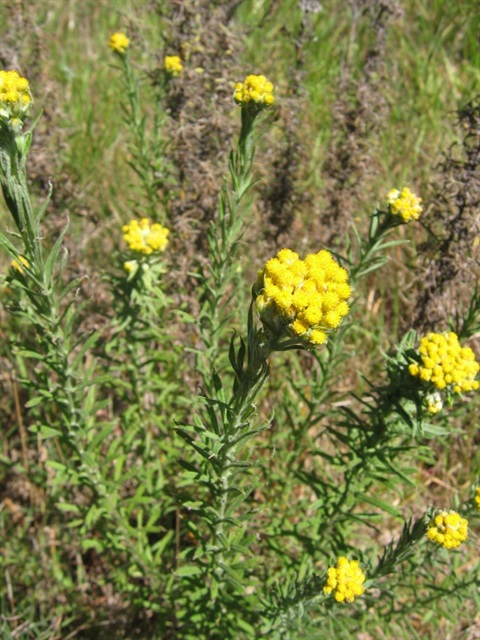
Chrysocephalum semipapposum ssp. semipapposum
Clustered Everlasting
Erect multi-stemmed perennial herb, stems and leaves with soft and stiff glandular hairs, rising from underground stems (rhizomes). Sometimes develops secondary stems in second year.
Additional information
- SynonymHelichrysum semipapposum
- FamilyAsteraceae
- StoreyLower storey
- Size0.3-1 m x 1-3 m
- Plant groupingHerbs & Groundcovers <1m
- LeavesShaggy narrow to oblong, grey-green leaves, often hairless above, grey-cottony below, to 7 cm x 1-4 mm; flat or recurved margins, tips with long points, base heart-shaped. Leaves on axillary shoots 5-15 mm long, in dense clumps, densely cottony below.
- Flower colourBright yellow
- Flowering timeSeptember to March
- FlowersDense clusters to 6 cm diam. of many hemispherical daisy flowerheads at the ends of stems.
- Bird attractingNo
- Butterfly attractingBoth food for caterpillars and nectar for butterflies.
- Frog habitatNo
- Growing conditionsMoist to dry soils in open forests. Full sun, semi-shade.
- Garden useAttractive garden plant creating swathes of golden flowers especially in summer. Suitable to underplant trees. Can be cut back to the base after flowering. Will spread in a garden setting.
- Commercially availableAustralian plant & indigenous nurseries. This subspecies may be more difficult to find. Subspecies may not be specified.
- Conservation statusUncommon, occurring on the western side of the Shire in the Mt Evelyn and Selby areas.
- Related speciesChrysocephalum semipapposum ssp. lineare is more common in the Shire. It is distinguished by cottony or short woolly hairs on the stems and leaves.
Photo Gallery
Photographer/s: 1 Marty White ©; 2, 4 Nimal Karunajeewa, Royal Botanic Gardens Board ©; 3 Chris Clarke, NatureShare ©
Plant Communities