Rats and Mice
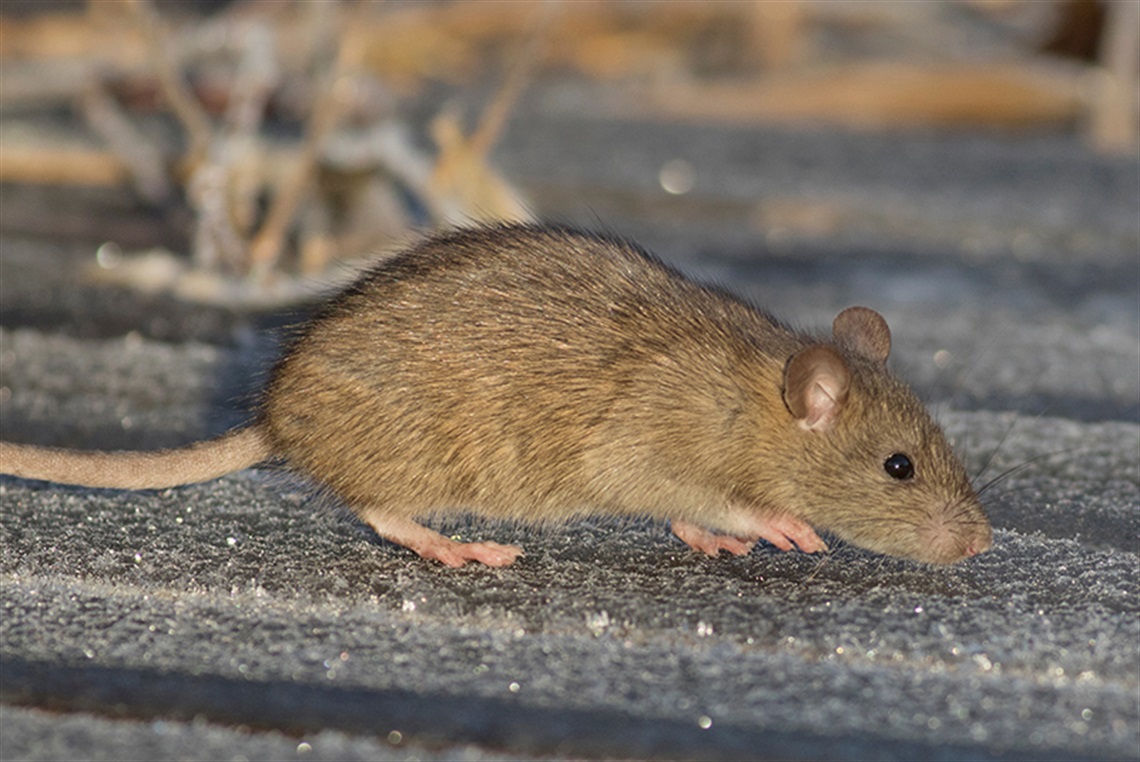
Black Rats and Brown Rats
Black Rats and Brown Rats are invasive species that originated from India, Siberia and China. They are fiercely competitive for their resources, eat almost anything and can breed quickly.
Black Rats, Brown Rats and mice are considered pests because they pose significant health risks, damage property, and contaminate food supplies. They nest in floors and walls and are found in sheds, piles of scrap materials, in compost heaps, under shrubs and hedges and in roofs.
If you have an infestation of rats or mice, you should aim to eliminate them using a safe method. Trapping and disposing of rodents is the best method as you can determine whether you’ve trapped an introduced or native species.
If trapping isn’t possible poison baits (rodenticides) are available for purchase, however, they should be used with caution and preferably be safe for wildlife and pets. There are currently two types of rodenticides available – First-Generation Anticoagulant and Second-Generation Anticoagulant. Ongoing research has found Second-Generation Anticoagulant Rodenticides (SGARs) can cause secondary poisoning. This happens with mammals and birds such as Powerful Owls and Tawny Frogmouths eat dead or dying poisoned rodents and are subsequently poisoned. Visit the Birdlife Australia website to find out more about rodent poisons.
Native Rats and Mice
It's thought that native rodents arrived in Australia around 5 million years ago with many species being wiped out after European arrival. Currently in Victoria, the most abundant native species are the Bush Rat and the Australian Swamp Rat. You may also see a Rakali (Water Rat) in the Yarra Ranges. Rakalis are black to brown in colour with an orange to white belly, and dark tail with a white tip.
Native rats usually have shorter tails compared to introduced (pest) rats.
Native rats can be told apart from introduced rats by their size and the shape, size and position of the ears. Native rats have shorter tails than introduced rats. For example, a Black Rat has a long tail compared to its remaining body length whilst Swamp Rats have a much shorter tail compared to the rest of their body.
Black Rats have proportionally large, rounded ears that stick out whilst the ears of Swamp Rats are rounded and small and are flat against the skull. A Bush Rat’s ears are generally smaller than a Black Rat’s ears.
Antechinus
Sometimes Antechinus can be mistaken as mice so make sure you’ve identified your ‘pest’ species correctly before reaching for a trap or bait as this small marsupial is protected under the National Parks and Wildlife Act 1972.
To tell an Antechinus apart from a common mouse look at their head. An Antechinus has a much pointier, long, narrow snout whereas a mouse has a rounded head and nose. The tail length of an Antechinus is almost equivalent to its body whilst a mouse will have a longer tail.
Antechinus have a much pointier, long, narrow snout whereas a mouse has a rounded head and nose.
Resources
Victorian Department of Health
Department of Health information on Rodents and pest control »
Birdlife Australia
Find out what to buy and what to avoid if you have exhausted non-poisonous methods of rodent control. Visit Birdlife Australia Act for Birds »
Reporting Pest Animals Sightings
By recording and reporting sightings of pest animals, you help researchers and government bodies understand the extent and range of these species and the impact they’re having on the environment.
FeralScan
FeralScan is a community pest animal recording and management tool that can be used via app or internet browser.
iNaturalist
iNaturalist is a global, citizen science platform where you can record sightings of flora, fauna and fungi. It can be used via app or internet browser.