Wandering Trad
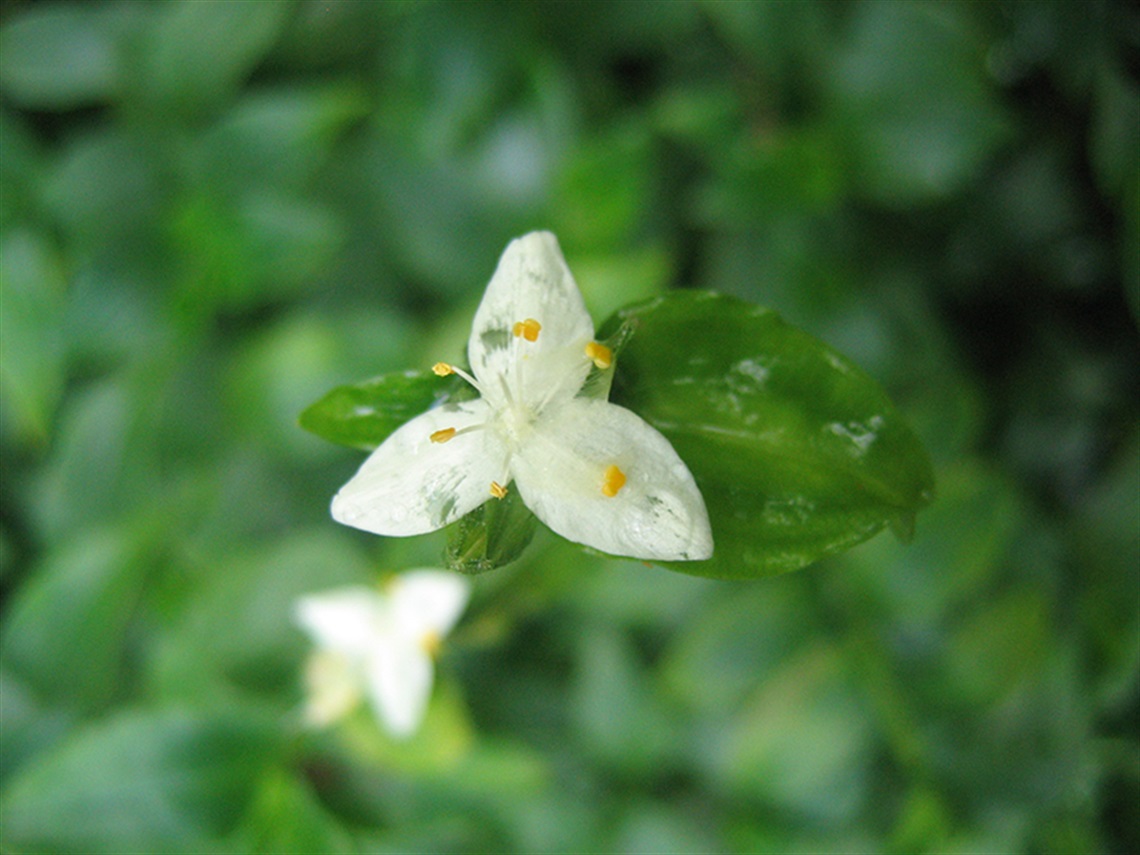
Tradescantia fluminensis
Origin: South America
Size: Prostrate spreading plant
Best removal time: All year
Flowers: September—February
What it does
Wandering Trad is a layering perennial herb forming a smothering carpet across the ground that can be over 500mm deep. It displaces indigenous ground covers, herbs, grasses and orchids and invades damp, wet and shaded areas of ground story and is widespread along creeks and waterways.
The leaves are a common cause of skin rashes in pets, particularly on the stomach area and it is toxic to cattle.
What it looks like
Wandering Trad has thick, succulent, glossy stems and leaves and small white flowers in summer.
How it spreads
- This plant spreads rapidly along the ground. Each leaf node along a stem is able to root and form a new plant. Stems are able to survive for up to one year without contact with soil or roots.
- The weed can spread rapidly in many ways; flower seeds, dumped garden rubbish, transportation by rain, footwear, car tyre treads and animals.
- It is not recommended to use a brushcutter or mower as this will spread the plant further.
Containment
Treat the edges of the infested area to keep it from spreading further. This allows time to apply a remedy as time allows.
Removal
By hand
All roots need to be removed and disposed of correctly while minimising disturbance to surrounding soil. Great care needs to be taken with removal from the site as even a tiny piece of stem will regrow. If in a thick mat it is possible to roll the weed on itself like a carpet using a rake. This will pick up the majority of it, then follow up is needed over several years to remove rooted fragments.
Solarisation
Cover the infected area with black plastic for approximately 4 weeks, weighting down the edges to eliminate light and water getting in. This process can take up to several months subject to localised weather conditions and time of year, the process will be quicker in hot weather. After removing the plastic, check for and control regrowth. Mulch the area to reduce/prevent regrowth.
Spray with herbicide
Control with the application of herbicide is possible, repeat follow-up treatments will be required for regrowth. Adding a surfactant will improve penetration into the waxy-coated leaves. Use a registered product and ensure you check the label and follow instructions. Ring the Department of Energy, Environment and Climate Action on 136 186 for full details.
Indigenous alternatives to plant
Many plant alternatives exist that are indigenous to the Yarra Ranges region and would make great substitutes for this weed species. Some alternatives include:
How to dispose of weeds
- By disposing of environmental weeds correctly you can prevent re-infestation on your property and elsewhere.
- Landfill (Weed Wipeout Tip vouchers available for some species).
- Green waste bins ensure that weeds are not able to spread.
- Woody weed stems can be bundled for green collection twice per annum.
- Composting (excluding seed heads or species with vegetative reproduction, e.g. Wandering Trad).
- Burning in accordance with Council and the Country Fire Authority (CFA) prescribed burning periods and regulations.
- Recovery and transfer stations available for weed tipping are Healesville, Wesburn, Coldstream, Lysterfield and Montrose.
Using chemicals
Non chemical treatment is often the most effective and safe option especially on smaller scale infestations.
Where chemical use is undertaken:
- Always follow the manufacturer’s guidelines when using chemicals.
- Wear protective clothing and eyewear.
- When purchasing your herbicide, always ask for a Materials Safety Data Sheet (MSDS) or refer to the manufacturer’s website for specific safety guidelines and information.
- Some herbicides will kill other plants and not just the target species.
- When used near waterways herbicides can be very poisonous to aquatic life.
- Use chemicals sparingly and be sure that you are using the right chemical and application technique.
- Ensure the weather conditions are suitable (e.g. minimal wind and no rain expected).
- Apply herbicides at the correct time during the plant’s growth cycle so you get the best results.